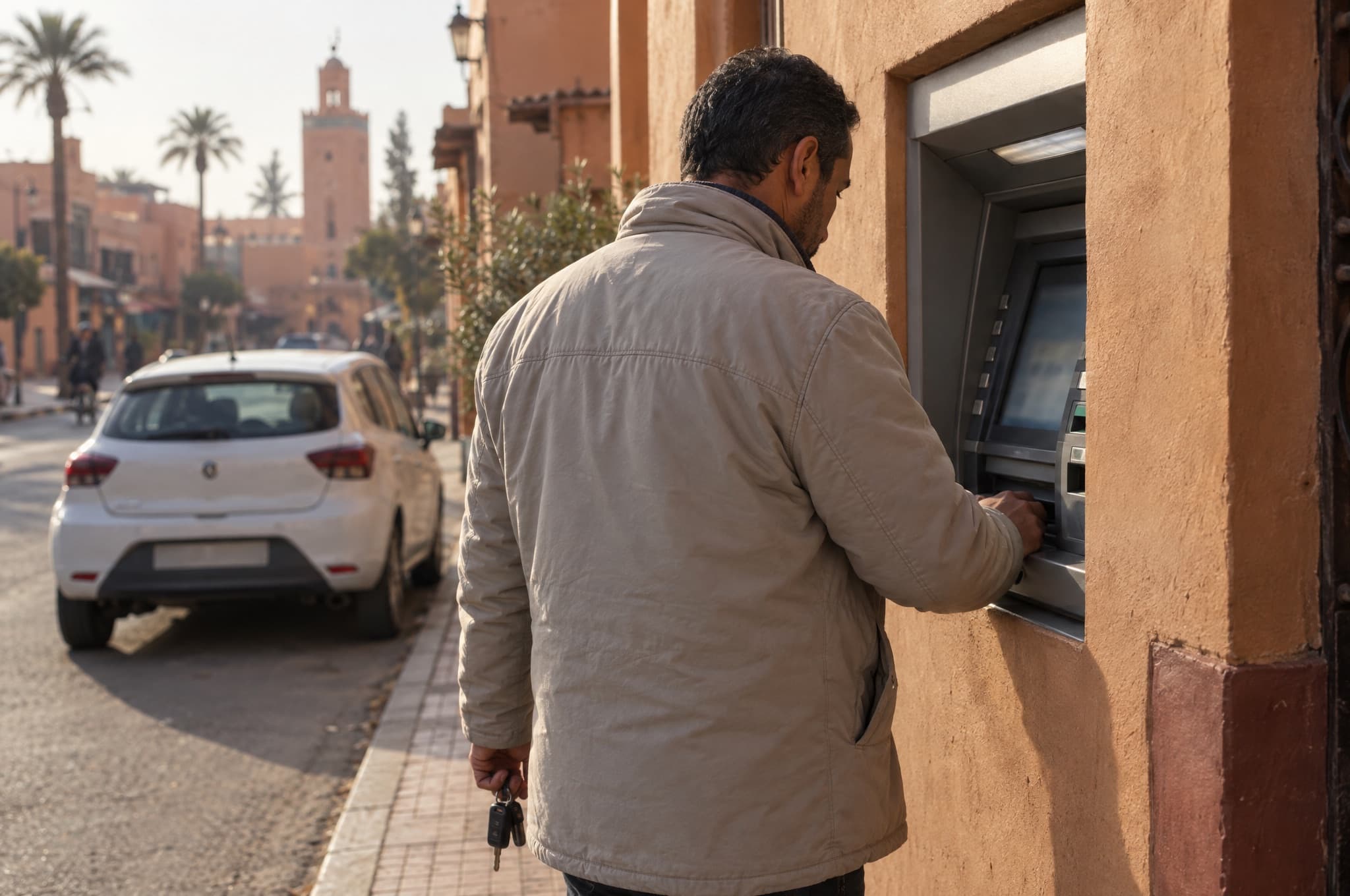
Car ownership transfer in Morocco: fees and steps
Transferring a used car in Morocco costs 50 DH per CV + 305 DH, and the buyer has 30 days to file at Barid Cash. Documents, steps and the late fine.
Last checked:
How does a car ownership transfer work?
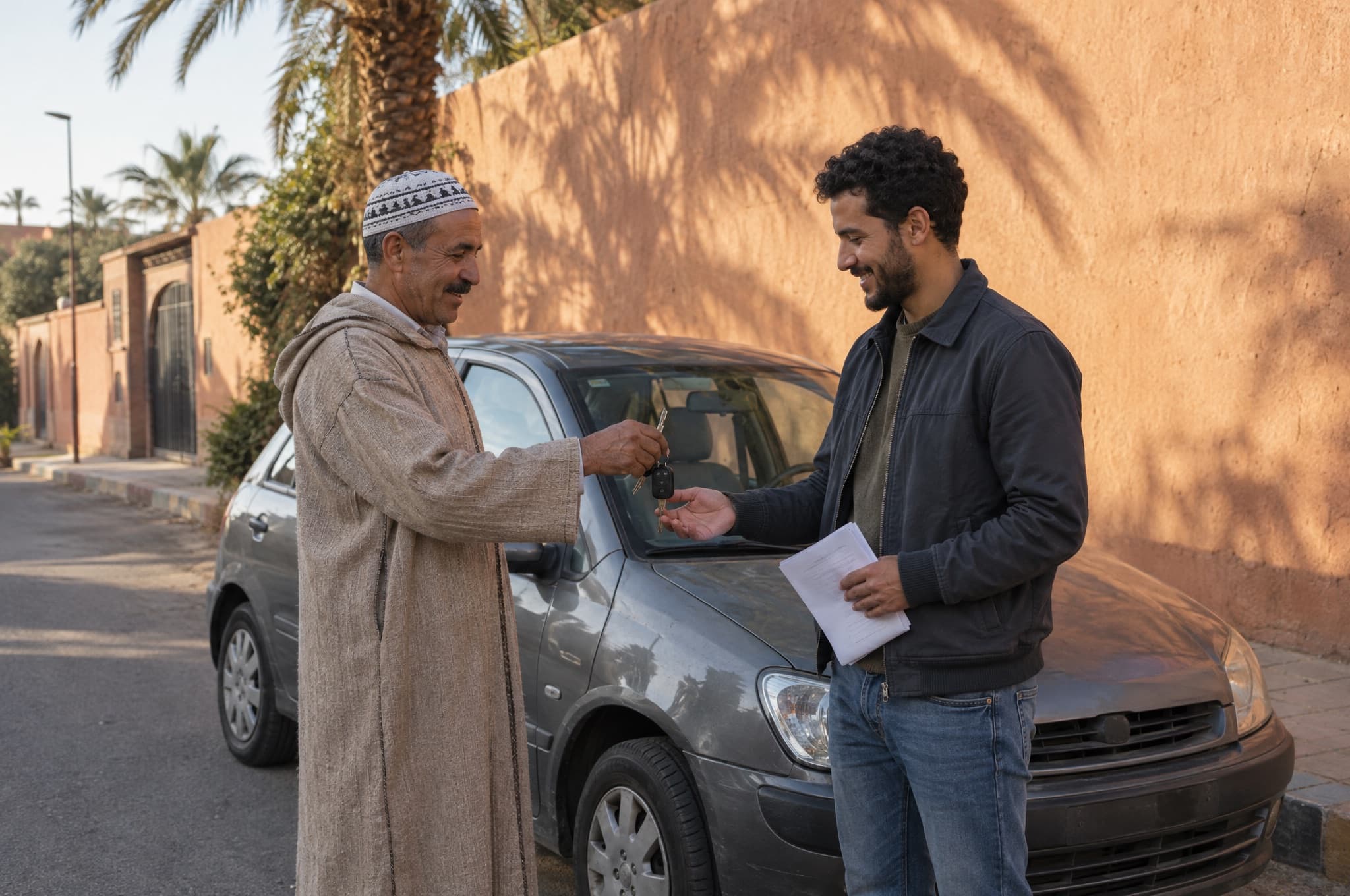
A transfer of ownership, known in Morocco as a mutation, puts the carte grise (registration certificate) in the buyer's name. For a used car it costs 50 DH per fiscal horsepower plus 305 DH (605 DH for a 6 CV car). The buyer then has 30 days from the legalisation of the signatures to hand in the file at an Al Barid Bank or Barid Cash branch, the post office's bank and payment outlets.
The steps, in order:
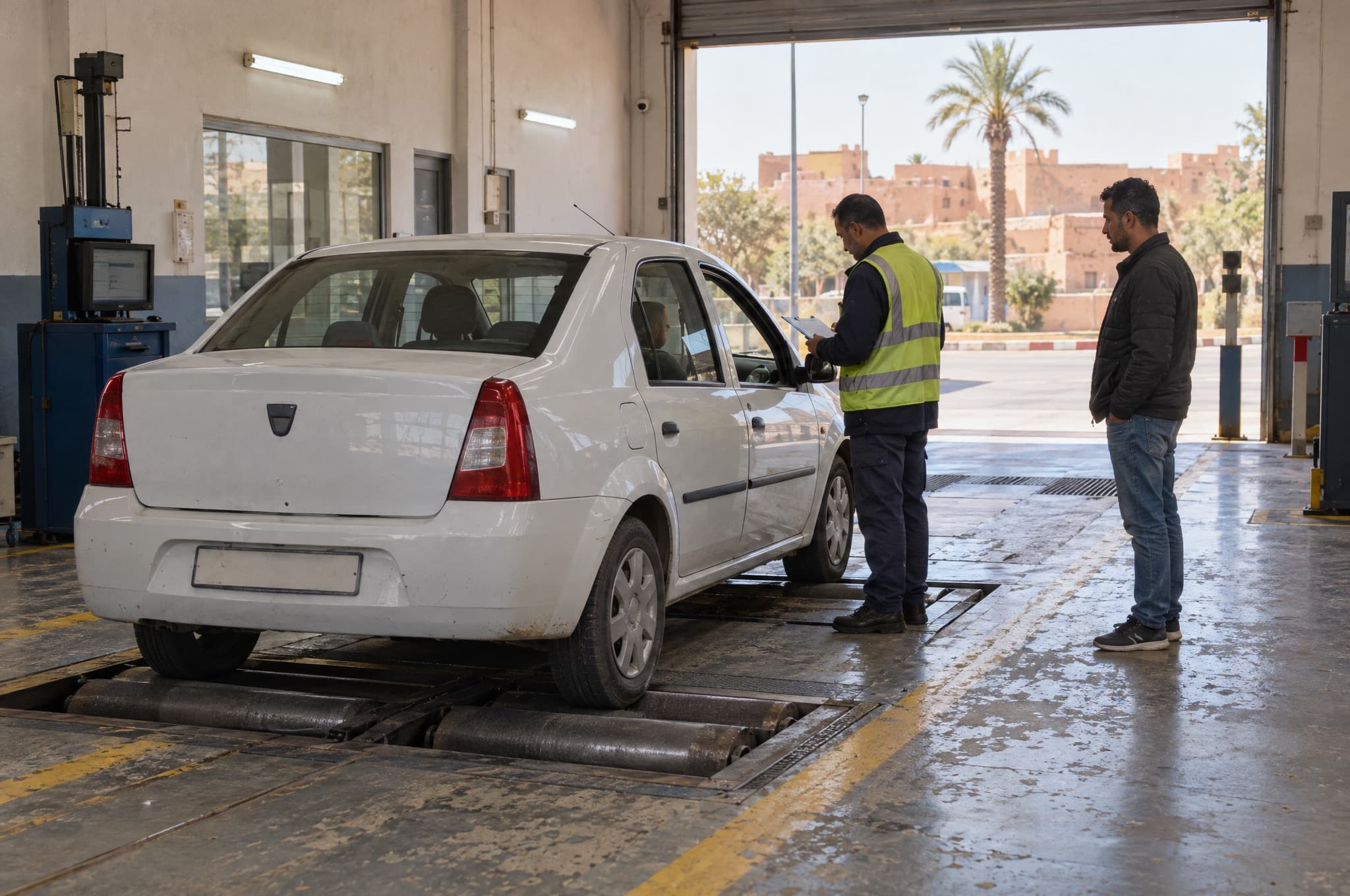
- The car passes its mutation inspection (contrôle technique de mutation).
- The seller declares the sale on mutationvehicule.ma, the portal run by NARSA (the national road-safety agency), and gives the buyer a reference number.
- The buyer completes a purchase request on the portal and prints the sale form.
- Seller and buyer have their signatures legalised together.
- One of them declares the sale as completed on the portal.
- The buyer pays the duties and hands in the file at a Barid branch in their city.
How much does a transfer cost?
NARSA publishes a simple rate for a car of 3,000 kg or less: 50 DH × fiscal horsepower + 305 DH. The fiscal horsepower (CV) is the figure on the carte grise.
| Fiscal horsepower | Transfer duties |
|---|---|
| 4 CV | 505 DH |
| 5 CV | 555 DH |
| 6 CV | 605 DH |
| 7 CV | 655 DH |
| 8 CV | 705 DH |
| 10 CV | 805 DH |
The 50 DH per CV is a stamp duty set by article 252 of the Code Général des Impôts. Only the horsepower counts: the car's age, value and fuel make no difference. The large amounts you sometimes see (2,500 DH, 4,500 DH and more) are for a car's first registration in Morocco, not for a resale.
A sale between private individuals doesn't have to be registered with the tax office, so there's no registration duty. You only owe it if the sale is drawn up as an adoul or notarial deed, or if you choose to register it: 3% of the price, with a minimum of 100 DH.
Three costs often come on top:
- The mutation inspection, paid at the centre (see our Visite technique guide).
- This year's Vignette, if it hasn't been paid. The law forbids the transfer until it is.
- The late fine, if the file goes in after 30 days.
Before you buy: oppositions, Vignette and fines
Three checks save you from a rejected file.
Oppositions. An opposition is an administrative or court decision that blocks a change of owner. Anyone can check for one on NARSA's "Consultation de l'état des oppositions" page, with the vehicle type and registration number. If there is one, the file can't be handed in without a mainlevée (lien release) from the body that registered it.
The Vignette. The Code Général des Impôts bars a transfer until the Vignette is paid for the current year and for every year not yet time-barred. Ask the seller for the receipt or the payment certificate. If the car is sold during the year, each buyer in turn is also jointly liable for that year's Vignette.
Fines and car loans. The law blocks the transfer until any traffic fines covered by an enforceable decision are paid. And if the car was bought on credit, you need the mainlevée once the loan has been paid off.
The steps on mutationvehicule.ma
The seller starts. They enter the registration number, the date the car was first registered in Morocco and the serial number of the carte grise. The portal checks these details and looks for oppositions before it goes any further. If everything is in order, the seller gets a unique reference to pass on to the buyer.
The buyer then opens a purchase request with that reference and the registration number, and prints the sale form in two copies. This form is the "Formule BI", the official sale and transfer form. For a sale on credit, it's the "Formule BII".
Getting the signatures legalised
Seller and buyer sign the Formule BI and have their signatures legalised together. The legalisation date matters a lot: it starts the clock on the buyer's 30 days and the seller's 15 days.
Next, one of them declares the "vente effective" (completed sale) on the portal: the legalisation date, the legalisation reference, the province, and a scan of the signed, legalised form.
The address the buyer gives must be the one on their CNIE (national electronic ID card). It decides which branch they hand the file in at.
Paying the transfer duties
You pay the duties online on E-Timbre, the electronic stamp portal of the DGI (the tax administration), under "Droits de mutation". The form asks for the car's details (registration number, fiscal horsepower, type, fuel, chassis number, date of sale), then the new owner's.
You get a payment reference with a deadline, and a receipt to download. Once you've paid, you can download the certificate (attestation) from the same portal. Keep the receipt and the certificate with the car's papers.
Documents for the file
The buyer hands these in at an approved Al Barid Bank or Barid Cash branch in their city:
- The signed Formule BI, with the signatures legalised.
- A copy of their valid CNIE, with an address that matches where they file.
- The original carte grise, in the seller's name.
- The procès-verbal (inspection report) from the mutation inspection.
- The receipt for the stamp duty and service fees.
- For a car on credit, the credit sale contract signed by the seller, the buyer and the lender.
- The mainlevée, if there is an opposition or a loan has been paid off.
- The receipt for the fine, if the 30-day deadline has passed.
A Moroccan living abroad whose CNIE shows an address outside Morocco provides a certificate of residence, a copy of their CNIE and a copy of their residence permit or valid Moroccan passport.
After you file: récépissé and tracking
The branch gives you a récépissé (receipt) valid for 60 days. It's marked "Non valable pour la vente du véhicule" (not valid for selling the vehicle): you can't use it to sell the car on before the new carte grise comes through.
You can follow the file on NARSA's "Suivi des dossiers" page with the registration type, registration number, vehicle type and filing date. idarati.ma, the government portal for administrative procedures, gives 60 days for processing.
The centre can reject a file. If it does, it writes the reason on a rejection slip (fiche de rejet).
Deadlines and fines
- Buyer: 30 days from the legalisation of the signatures to hand in the file.
- Seller: 15 days to declare the sale, and they get a receipt for it.
- Inheritance, gift, partition, court-ordered sale or auction: 90 days.
Filing late costs a 500 DH fine, plus 10% of that fine for each month of delay. A month that has started counts as a full month, so one month late comes to 550 DH and three months to 650 DH.
Knowingly giving false information when you transfer a car is a criminal offence, punishable by 6 months to 3 years in prison and a fine of 2,000 to 5,000 DH.
What the seller does
As well as the declaration on the portal, the law requires the seller to declare the sale within 15 days on the "Annexe 31" form (the seller's declaration of sale), with their signature legalised. With it go a copy of the Formule BI, a copy of their CNIE, proof of residence and, if needed, the mainlevée.
Two NARSA pages disagree on where to hand in this declaration: a Barid branch, or NARSA's provincial office. Ask at the branch when you sell.
Proxy, inheritance and other cases
- Selling through a proxy: include the special power of attorney (mandat spécial), with the signatures of both the owner and the proxy legalised. It must name the make and registration number and state clearly that the proxy may sell the car.
- Inheritance: add the inheritance deed (acte d'hérédité) drawn up by adouls or a notary and, if needed, a waiver from the other heirs. The deadline is 90 days.
- Buying from a company: add the trade register (registre de commerce) and the articles of association, or the minutes of the last general meeting naming the person authorised to sell.
- Buying from a used-car dealer: add a copy of their W18 dealer card for the current year.
- Car bought for a minor: the legal guardian signs and adds the minor's birth certificate extract and a copy of their own CNIE.
How GarageLink helps
If you're selling, your GarageLink service book shows the buyer what was done on the car, and when. If you're buying, add the car to GarageLink and you'll get a reminder before the next Vignette, the next Visite technique and your insurance renewal.
Sources
The official texts this guide is based on. Rules change — check the source before you act. Last checked: October 20, 2026.
- Mutation de véhicules ↗Agence Nationale de la Sécurité Routière (NARSA)
- تحويل ملكية المركبات ↗الوكالة الوطنية للسلامة الطرقية (نارسا)
- Portail de mutation des véhicules — Guide d'utilisation ↗NARSA
- Formule BI (dossier de mutation) ↗NARSA
- Formule BII (vente à crédit) ↗NARSA
- Consultation de l'état des oppositions ↗NARSA
- Suivi des dossiers ↗NARSA
- Mutation de mon véhicule ↗NARSA
- Déclaration du vendeur ↗NARSA
- Annexe 6 — Documents justificatifs de la résidence ↗NARSA
- Annexe 31 — Déclaration de mutation de véhicule ↗NARSA
- Qu'est ce que le contrôle technique et quand dois-je le passer ? ↗NARSA
- Echange de ma carte grise ↗Agence Nationale de la Sécurité Routière (NARSA)
- E-Timbre — Droits de mutation de véhicule ↗Direction Générale des Impôts (DGI)
- Paiement en ligne des droits de timbre ↗Ministère de l'Economie et des Finances
- Code Général des Impôts 2026 (art. 127, 128, 132, 133 — droits d'enregistrement; art. 179, 183; art. 252 — droits de timbre; art. 262, 263 — TSAV) ↗Direction Générale des Impôts (DGI)
- Loi n° 52-05 portant code de la route (version consolidée) ↗Secrétariat Général du Gouvernement
- Décret n° 2-10-421 pris pour l'application de la loi n° 52-05 relatives aux véhicules (version consolidée) ↗Secrétariat Général du Gouvernement
- نقل ملكية مركبة ↗idarati.ma